“Collaboration is our superpower: Our capacity to coordinate at scale is one of humanity’s greatest strengths—and a key to regenerative futures”.
From ‘The Future of Innovation is Collective’.
Stanford Social Innovation Review, Summer 2025, 23(3).
What power do collaboration and networking bring to educational institutions worldwide, and how can networking opportunities help us take a step toward the future of education? In this article we share some highlights and practical experiences of the Global Design Thinking Alliance members collaboration – ESPOL University (Escuela Superior Politécnica del Litoral) in Ecuador and Design Thinking Center, Asia from Kazakhstan.
GDTA: rethinking networking
Networking is not new, specifically to educational institutions world full of regional and academic alliances. But traditional academic networking often suffers from insularity of closed, discipline-specific connections, prioritizing internal discourse over wider and more practical, external application, often with limited or no collaboration across institutions, industries, and non-academic sectors.
Overcoming these limitations requires actively cultivating trans-sectoral collaboration, which means intentionally forming alliances with corporations, governmental bodies, startups, and community organizations. Practical strategies include establishing joint design labs, embedding student projects within external organizations, creating shared mentorship programs, and adopting open innovation platforms that treat real-world challenges—not just academic publications—as the primary collaborative currency.
The Global Design Thinking Alliance (GDTA) is pioneering a new model for educational and innovation networking, deliberately moving beyond the constraints of traditional academic consortia. It functions as a dynamic, borderless ecosystem designed to facilitate radical interdisciplinary collaboration and connection among a diverse set of stakeholders.
Unlike older networks that often remain insulated, the GDTA actively integrates universities like ESPOL, specialized innovation hubs such as the Design Thinking Center, Asia, and external entities including corporations, NGOs, and governmental bodies. This trans-sectoral approach ensures that the network’s collective output is not merely theoretical but practically applied, addressing complex, real-world challenges by leveraging the varied expertise, cultural insights, and operational contexts of its global membership.
New Alliances for the New World
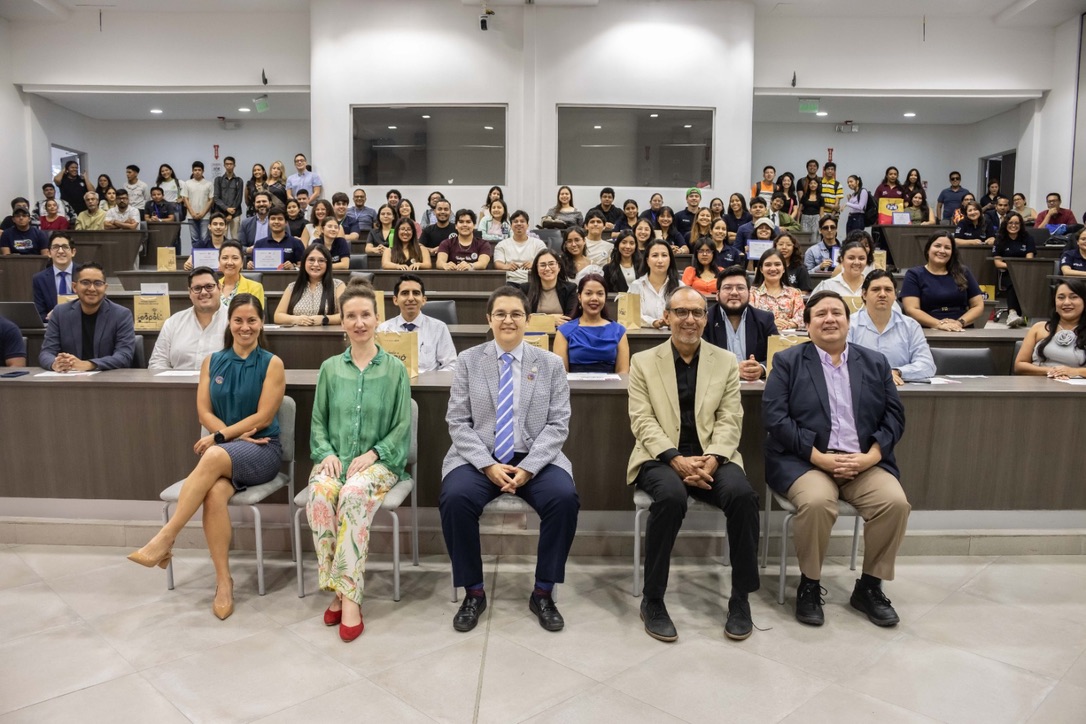
In 2025 two member institutions from GDTA – ESPOL University in Ecuador and Design Thinking Center, Asia from Kazakhstan collaborated within an intensive innovation week to exchange tools and experiences from the very different continents.
Specifically, Design Thinking became a universal language and a collaborative platform for building a successful collaborative experience.
Sharon Guaman-Quintanilla, i3lab-Center of Entrepreneurship and Innovation at ESPOL, GDTA member:
“As a representative of ESPOL University in the GDTA I’m passionate about the power of Design Thinking. I believe that by bringing a human-centered perspective to problem-solving and creative processes it makes a foundation for collaboration between regions and disciplines. As a unique network GDTA unites different types of organizations, such as NGOs, higher education institutions, consulting firms and research labs, whose global and cross-disciplinary experience brings invaluable input into our academic environment”
A week of entrepreneurship and innovations at ESPOL, also known as i3week, became a space for exchange and the creation of new networking opportunities.
The i3Week is organized by the i3Lab (ESPOL’s Center of Entrepreneurship and Innovation). It consists of an annual event focused on fostering innovation, entrepreneurship, and research by bringing together academics, business leaders, entrepreneurs, researchers, students, and society in general. This event promotes a space for learning, sharing ideas, and collaborating in the creation of value. It features workshops, talks, awards (i3Awards), and activities like design thinking, personal branding, and investment strategies, fostering creativity, collaboration, and the entrepreneurial ecosystem in Ecuador.
The Design Thinking Center Asia experience was brought to ESPOL by Maria Stashenko, DTCA founder and GDTA Managing Board member with more than 20 years of Design Thinking application experience in business, not-for-profit initiatives and education innovations.
For ESPOL it was a valuable experience of embracing other cultures’ approaches to innovation, idea generation, and new Design Thinking problem-solving tools.
The collaboration included varied types of formats for i3week both internal and external participants:
- Design Thinking tools and applications for the faculty staff,
- Idea Generation and Problem-Solving workshops for student leaders and student clubs members,
- Design Thinking master-classes for entrepreneurs in varied fields.
Beyond the core alliance with the Design Thinking Center, Asia, i3lab also facilitated in-person collaborations with other GDTA member institutions prior to i3week. In 2025, representatives from the Hasso Plattner Institute (Potsdam) and Penn State University—Samuel Tschepe and Matt Parkinson, respectively—visited ESPOL to participate in workshops, meetings, and public talks on design thinking, artificial intelligence, and designing for human variability. These activities were conducted independently of i3week, yet they further enriched the exchange, reinforcing i3lab as a living platform for global knowledge sharing within the GDTA network.
Spreading Innovations
GDTA global outreach gives unique opportunities to its members in knowledge and experience exchange. This is how a trend construction tool, originally developed in another part of the world, came to Ecuador.
Maria Stashenko, Design Thinking Center Asia, GDTA governing board member
“It was back in 2010, when we were making Design Thinking workshops focusing on current and future trends for students at the British Higher School of Art and Design trying to imagine the future of collaboration. It was Andrey Khusid among our students who then became a Miro founder, global collaboration product based on current trends” – says Maria Stashenko.
“Playing the Future. A trend Watching game” – a trend construction tool for product and service design teams and students of varied disciplines became one of the popular applications in the Design Thinking process worldwide.
The idea is simple – It helps teams to apply most current trends in the idea generation process to make it more focused and fulfilled with trend features.
In the dynamic landscape of innovation, “Playing the Future” emerges as a powerful trend-watching game, transforming foresight into a tangible and collaborative exercise. This engaging toolkit, built around curated decks of Technological, Cultural, Customer, and Business trend cards, empowers product and service design teams to systematically pressure-test and enrich their concepts.
By applying varied and sometimes provocative trends through simple game mechanics, teams break free from cognitive biases and linear thinking, uncovering latent user needs and unanticipated market opportunities.
The structured yet creative play fosters cross-disciplinary dialogue, ensuring solutions are not only technologically feasible but also culturally resonant, customer-centric, and commercially viable. Ultimately, the game turns abstract trends into concrete strategic assets, de-risking the innovation process and seeding ideas that are robust, relevant, and ready for the future.
Networking Success Formula
The groundbreaking collaboration between ESPOL University in Ecuador and the Design Thinking Center, Asia in Kazakhstan stands as a powerful testament to the transformative power of global networks. More than a successful partnership, their joint work has forged a tangible and replicable blueprint for innovation—a formula that leverages distance and diversity as its greatest strengths. This model, which we term the Transcontinental Catalyst Formula, reveals that the true power of networking lies not in simple connection, but in the structured, intentional creation of new knowledge and capability.
The success of this alliance can be distilled into a three-part operational formula:
-
Structured Exchange, Not Just Sharing
The partnership moved beyond theoretical discussions to implement a structured *Exchange of Knowledge and Tools*. This meant co-applying methodologies like design thinking to parallel local challenges in both Guayaquil and Almaty, then systematically comparing results and adapting frameworks. This process transformed static toolkits into dynamic, living resources validated across continents.
-
Cultural Pattern Interference as an Innovation Catalyst
This collaboration intentionally fostered a *clash and fusion of innovative culture patterns*. The fast-paced, iterative, and scalability-oriented approach common to many Asian startup ecosystems was placed in direct dialogue with the high-context creativity, narrative-driven design, and resilient “problem-resolver” mindset of Latin American innovation. This deliberate interference moved beyond simple cultural awareness, creating a fertile ground for hybrid methodologies—where rapid prototyping meets deep human-centered storytelling, resulting in uniquely adaptive and globally resonant solutions for educational challenges.
-
The GDTA as a Platform for New Geographies of Collaboration
Critically, this partnership underscores the unique role of the GDTA in creating *novel geographies of collaboration*. The network provided a vital conduit between two dynamic regions—Central Asia and Latin America—that are rich in talent and innovation but often underrepresented in traditional global education forums. By facilitating this connection, the GDTA enabled a “south-south-north” exchange that bypasses conventional hubs, thereby democratizing innovation. This case demonstrates that the future of education is being shaped not only in well-established centers, but equally in the vibrant, cross-pollinating dialogues between emerging global innovators.
Strategic networking is the essential framework for modern education. It transforms institutions into connected hubs, improving information flow and unlocking vital resources. This connectivity fuels leadership, collaboration, and the innovation needed for real breakthroughs.
Moreover, it acts as a powerful engine for equity and inclusion, bridging divides and enriching practice with diverse global perspectives instead of diluting them. The result is clear: measurable improvements in educational outcomes. Ultimately, networking provides the scale to amplify impact, allowing a local insight to spark positive change worldwide, moving education decisively forward.